


A New View of Shoulder Dystocia

Updated: 6 days ago
Panic and fear arise in the hearts of many midwives and doctors when they think of shoulder dystocia. Many feel a strong desire to teach everyone else how best to manage the situation. Yet, for others, the same topic creates dismay at over-diagnosis and frustration at the needless interventions imposed on so many otherwise normal births.
How can competent, informed care providers hold such opposite views of seemingly the same complication?
Why are there so many reports of seemingly different resolution methods? How can a one-minute delay of the shoulders sometimes be normal, while at other times it results in a severely depressed baby who needs extensive resuscitation?
And is there truth behind stories of babies remaining on the perineum for 5, 10, 15, or even 20 minutes with no sequelae?
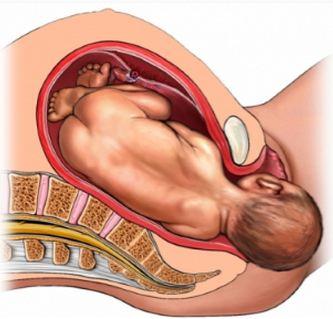
Why Shoulder Dystocia Is Not One Situation
For starters, multiple scenarios can occur during birth, yet all may be labeled “shoulder dystocia.” Birth itself also looks radically different depending on the birth environment.
As Ina May Gaskin reminds us: “Physiologically, birth doesn’t happen the same way around surgeons, medically trained doctors, as it does around sympathetic women.”
Although less discussed in mainstream conversations, a baby’s reserves during birth—and during a dystocia—are directly connected to the mother’s nutritional history, habits, and status. But that is a topic for another article.
What Does Shoulder Dystocia Mean?
Dystocia simply means “lack of progress.” Shoulder dystocia means “lack of progress at the shoulders.”
Each situation described below requires a skilled provider’s assistance to an increasing degree. Without a skilled provider, babies experiencing true shoulder dystocia may face grave outcomes.
Many midwifery circles use the phrase “sticky shoulders,” even though it is not a precise clinical term. I loosely define it as: “It was scary, we almost had to do something,” or “We did something, then afterward realized it was not really necessary, so we called it something.”
Clearer Language for Charting and Peer Review
I encourage midwives to use the following terms when charting at births and reporting at peer review. More accurate language helps a woman’s next care provider assess her real risk rather than respond to perceived fear.
1. Normal Spontaneous Vaginal Delivery (NSVD)
A normal spontaneous vaginal delivery is any birth that completes on the mother’s own power—or with the midwife’s suggestions—and does not result in a depressed baby, even if the baby remains on the perineum for quite a while.
2. NSVD Complicated by Shoulder Dystocia
Use this language when a birth requires the midwife’s hand maneuvers and direction to complete delivery:
NSVD complicated by shoulder dystocia of _ minutes, resolved using techniques.
Time should be measured from the moment the midwife recognizes the need for physical intervention—not necessarily from the entire time the head is out.
These definitions presuppose several components of midwifery skill and risk assessment:
Skilled assistants who accurately record the timing of major events
The ability to assess and interpret fetal status throughout labor, including knowing which babies should be transferred out of care for fetal distress before birth
Current, accessible, and practiced skill in resolving dystocia
The ability to direct a practiced Neonatal Resuscitation Program (NRP) response with enough skilled people to continue until EMS arrives
Sometimes this means continuing NRP all the way to the hospital, because EMS neonatal resuscitation skill is not uniformly proficient across the country. For this reason, out-of-hospital birth should not be attempted where the distance from EMS to the home exceeds the time the birth team could sustain effective neonatal resuscitation.
Most importantly, because there are suddenly two patients at birth, every resuscitation effort requires the team to simultaneously manage maternal postpartum care. It is essential to bring enough skilled people to every birth so that every emergency can be handled appropriately.

Shoulder Dystocia Risk Factors
Predictive conditions and risk factors for shoulder dystocia may include:
Large baby
Gestational diabetes
History of dystocia
First-time mother
Narrow pubic arch
History of broken tailbone
Prominent ischial spines
Long labor
Fetal distress
Supine birth position and/or epidural
Fetal arm behind the back or nuchal arm, although this is unlikely to be known in advance
How Common Is Shoulder Dystocia?
Shoulder dystocia incidence is generally reported between 0.3% and 1.5%, with scattered reports both higher and lower. The “true” incidence depends heavily on how it is defined, reported, and measured within a given population.
For example, ACOG’s bulletin on shoulder dystocia lists a rate of 1.4% of vaginal births, while the Royal College of Obstetricians and Gynaecologists reports 0.6% in Great Britain.
Dr. Henry Lerner, Assistant Clinical Professor at Harvard Medical School, has written that many obstetricians are reluctant to document shoulder dystocia because it may later be viewed as a red flag in a malpractice claim. Some studies suggest that only 25% to 50% of shoulder dystocias observed objectively in the delivery room are recorded by the delivering physician.
Definitions also affect the numbers. Some clinicians record shoulder dystocia only when specific maneuvers are required; others record any delay after the birth of the head; and some record it only when fetal injury occurs. Population characteristics matter too: a group with more large babies or more diabetic mothers will show a higher reported incidence than a general population.
The bottom line: we do not truly know the exact rate of incidence. Most homebirth midwives report a rate higher than 1%, so we must be prepared for shoulder dystocia at every birth—even at “roomy” multip births with no identifiable risk factors.
Recognizing Shoulder Dystocia in Real Time
Even if we cannot know exactly how often dystocia occurs, we can learn to recognize when it is happening.
I am a proponent of the old midwifery adage from Kitty Earnst: “No intervention in the absence of complication.” It is a brilliant phrase—as long as we truly understand what constitutes a complication.
In a normal second stage, the baby makes distinct, consistent progress. Every maternal effort moves the baby a measurable amount, even if the baby retraces their steps many times before the head emerges.
Progress over time is an individual and somewhat subjective assessment. This is one reason I advocate for a robust midwifery team, allowing the primary midwife to step in and out of the birth room—even at homebirths—so she maintains the perspective needed for assessment.
Dysfunction related to the birth of the shoulders occurs when the forces that effectively birthed the head no longer create the same action.
The primary midwife should not come and go while waiting for the shoulders. Instead, she must know this mother’s pushing ability and style, having just witnessed the birth of the baby’s head. She should expect a similar amount of force to efficiently deliver the rest of the baby in the next contraction. If it does not, action is needed.
The specific maneuvers, sequence, and decision points are the subject of many workshops—and of our live Shoulder Dystocia Lab below.
Is the “One-Step” Approach Part of the Problem?
Interestingly, the common midwifery expectation that the shoulders will birth in the contraction after the head is not a universal obstetric notion.
Dr. Leslie Iffy, a maternal-fetal medicine specialist and expert on shoulder dystocia, co-authored a 2015 paper, “Epidemiologic aspects of shoulder dystocia-related neurological birth injuries.” The authors concluded that shoulder dystocia incidents began to escalate in the United States during the 1980s, shortly after the introduction of “active management” of the birthing process. They suggested that this interventionist approach replaced a more conservative philosophy and may have contributed to rising rates of shoulder dystocia.
Active management of the actual delivery was proposed in the 1976 edition of Williams Obstetrics. This “one-step” technique recommends attempting to deliver the infant’s shoulder immediately after the birth of the head. Earlier editions described a “two-step” approach: expecting the shoulders to emerge in the contraction following delivery of the head.
Iffy suggested that this shift may help explain not only the rise in brachial plexus injuries but also the increase in shoulder dystocia rates overall. At best, the one-step approach may rush the process; at worst, it may interfere with the baby’s shoulder before it has time to restitute.
Time alone does not reliably predict the need for intervention or the baby’s outcome. Instead, midwives can distinguish normal from abnormal by observing:
Lack of normal progress in the birth of the head or first expulsive efforts of the shoulders
Abnormal fetal head coloring
Gasping or respiratory effort before birth
The “turtle sign”
The Three Types of Shoulder Dystocia
As more women choose to birth outside the hospital, midwives have an opportunity to observe more and more physiologic birth and draw conclusions about complications and intervention from as clear a view as possible.
In my experience, there are three distinct types of shoulder dystocia, although one is only able to identify the type AFTER the birth. I label them according to the increasing speed with which the provider must intervene.
1. STUCK BUT NOT COMPROMISED
This non-emergent dystocia is the least dangerous for the baby. The baby may truly be stuck—on the pubic bone, ischial spines, or coccyx—but is not depressed.
This is why we can work hard to free a baby who is genuinely stuck yet continues to have good color and either needs no resuscitation or recovers after stimulation and a few breaths.
The baby may be stuck because of position or pelvic shape, but they are not compromised. Without effective, timely action, this can change rapidly. The baby still needs help, but they are not struggling at the outset.
Many midwives have stories that colleagues react to with disbelief: babies on the perineum for 6, 8, or 12 minutes who are then completely fine. These are examples of non-emergent dystocia—babies who are truly stuck, but not in distress.
Take quick action, but do not be surprised when the outcome is good.
2. COMPROMISED BUT NOT STUCK
An emergent shoulder dystocia is essentially the birth of a compromised baby who is slow to deliver at the shoulders.
Babies play a major role in their own births: moving, pushing, and arching themselves out. This is one reason full-term, healthy, unmedicated births often go well in any setting.
When a baby has lost reserves—because of placental insufficiency, cord compression, undiagnosed intrauterine growth restriction, chorioamnionitis, uterine infection, or another source of fetal distress—the baby may stop fully participating in their own birth.
Descent, rotation, flexion, and synclitism can all be affected by reduced muscle tone or movement. The head may be expelled by maternal power while the baby is unable to restitute or assist their own descent.
This type of birth is an emergency before it begins. These babies need resuscitative efforts as soon as possible, often evidenced by low Apgar scores at birth.
Many of these births are correctly identified before delivery and transferred to the hospital for fetal distress. If not, these babies may have a slow delivery of the head, may be tangled in the cord, and may be relatively easy to deliver once action is taken—but they need substantial resuscitation.
They are not truly stuck; they are often descending in unusual positions because their muscle tone is flaccid. They are floppy and unable to fight to be born. They need immediate help.
3. CATASTROPHIC SHOULDER DYSTOCIA
Catastrophic shoulder dystocia has the potential to be exactly that: a stuck baby who is already compromised.
We want to do everything possible to identify and transfer these babies before birth, but we also need to train for these scenarios with seriousness and repetition.
Preventing this type of dystocia is the source of much of the fear surrounding shoulder dystocia. It drives cesareans for large babies or dysfunctional labors, as well as many forms of interference at otherwise normal births.
If you are ever the midwife at a catastrophic shoulder dystocia, please seek support and counseling right away. We need you—wonderful, hardworking, traumatized midwife—to come back from that experience ready to teach and counsel others.
These are the babies who may spend weeks in the NICU, sustain broken arms or nerve injuries, experience paralysis or HIE, require cooling, or, tragically, may not survive.
If you attend a long, complicated dystocia that requires a long, complicated resuscitation—and the baby lives without complication or never needs transport—thank your lucky stars. You have just won the midwifery lottery.
What Should a Midwife Do?
Right now, the major limitation of this framework is that these categories can only be fully identified after the fact. We cannot definitively know in advance which babies or births will experience which type of dystocia.
But we do have clues. And we have an increasingly skilled midwifery community. Here’s how to get better skilled:
1. Become an Expert in Fetal Surveillance
Understand how to assess the baseline throughout labor, recognize changes, and know how often and how long to listen.
Know the difference between early, variable, and late decelerations. Importantly, transfer Category II and III babies. Homebirth midwives care for low-risk clients, and the only babies we can definitively call low risk are Category I babies.
If you need a refresher on fetal heart tone assessment, consider taking our 4-CEU Online Course FHT Monitoring.
2. Practice Every Resolution Technique
Know every possible technique for freeing a stuck baby. Take workshops. Practice with colleagues and students. Practice until the movements live in your hands.
And then create role-play scenarios with a “mother actor” so you remember to communicate clearly with the client. It is easy to practice maneuvers on a mannequin and forget what it would feel like in real life—and how essential communication is for the birthing person’s physical and emotional safety.
3. Practice NRP Until It Is Second Nature
Do not simply recertify every two years. Know NRP by heart—forward and backward—well enough to explain it at 3 a.m. to a new student.
If the current NRP format is challenging, take a Helping Babies Breathe workshop. Run scenarios in your mind, role-play with your practice, and discuss case studies until the sequence becomes automatic.
Invest in a reliable pulse oximeter. If you can get the baby out, you must also be able to help them breathe, which is now informed by oxygen saturation.
4. Ground Yourself Before the Emergency
Deep breaths. You really can take comfort in being a homebirth midwife serving highly motivated, health-oriented, unmedicated families.
Your clients will often do the things you suggest, invest in their prenatal health, and grow strong babies. Babies instinctively know how to be born—and they help.
Because you are a skilled midwife who knows your limits and listens to your heart, you will transfer the mothers and babies who are not meant for your care.
Relax, because it is not solely your job to deliver healthy babies. Delegate much of the work back to the mother. Build a comprehensive prenatal program that supports her health and confidence. Inspire confidence; model confidence.
Belief is a combination of thought, feeling, and action. Think through how to resolve dystocia, feel into the emotions, and when in doubt—take action. Believe you can handle it, and so will she.
Practice Shoulder Dystocia With Your Hands
Reading about shoulder dystocia is not the same as having practiced the sequence under pressure.
If you want hands that already know what to do when the head is born, the baby turtles, and the room goes quiet, join the Shoulder Dystocia Lab.
This is a live, interactive 90-minute online lab with Augustine Colebrook, designed for midwifery students, new graduates, practicing midwives, and birth professionals in community settings. You will use your own practice doll and pelvis models at home while Augustine demonstrates the MOVE framework, narrates a birth in real time, and coaches you through hands-on drills, freeze-and-show moments, and paired practice together.
You will leave with:
A framework you can hold in your head under pressure
Hands that have practiced the sequence, not just read about it
A grounding and breath practice you can use before an emergency
Answers to your specific questions from a teacher with more than a decade of shoulder dystocia teaching experience and more than two decades facing this complication.
The lab is offered as a Solo ticket for $99 or a Duo ticket for $149, allowing two colleagues to share one screen. It is a somatic learning lab rather than a CEU course.
Reserve your spot in the Shoulder Dystocia Lab here.
Please contact me to suggest an article topic, and subscribe to my newsletter for more midwifery wisdom, clinical reflection, and practice-based education.


Comments